Should I Repair or Replace My Water Heater? Signs That Help You Decide
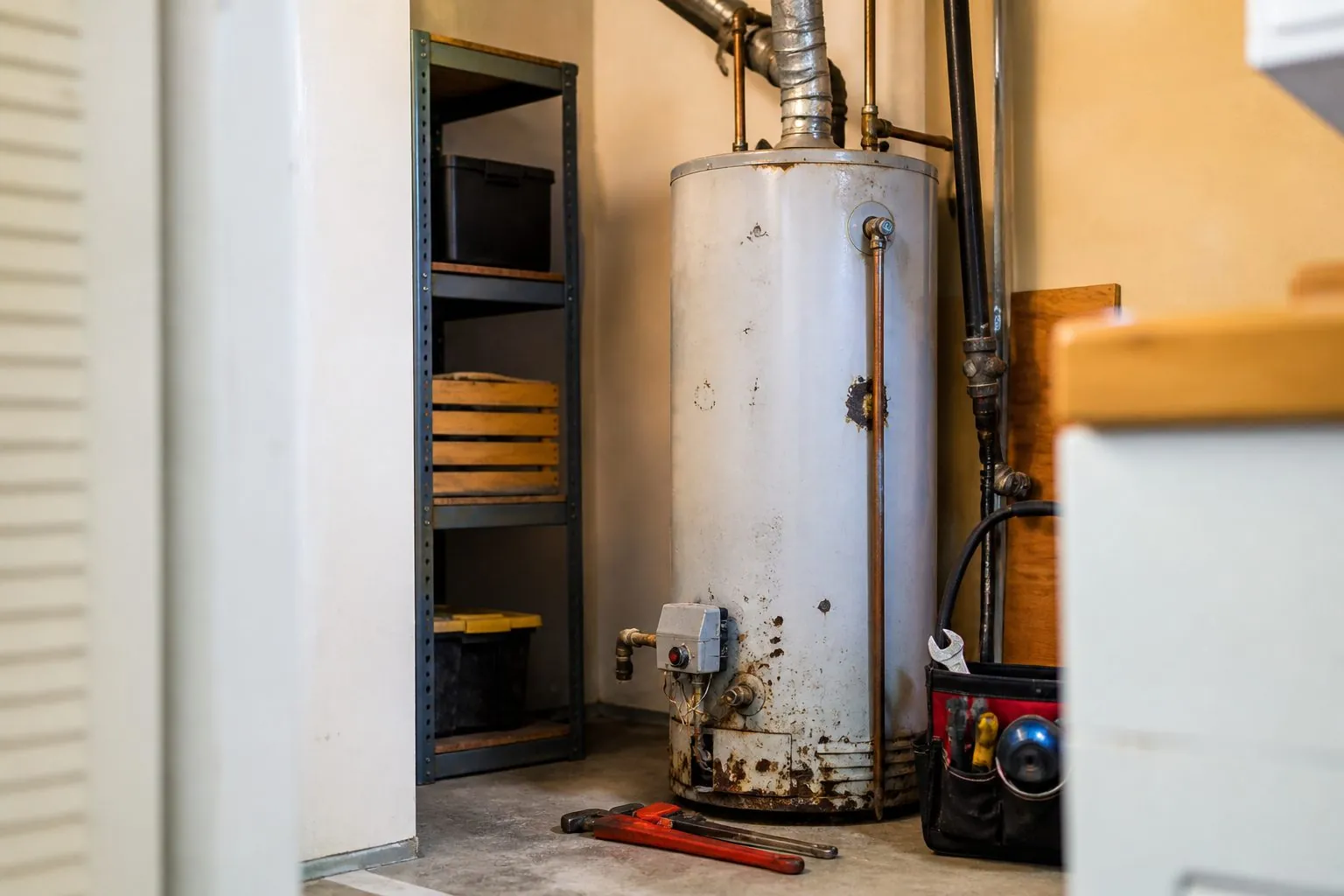
A water heater does not need replacement just because something went wrong. Repair often makes sense when the problem is isolated and the rest of the system is still in good condition. Replacement becomes more practical when the tank itself is leaking, repairs keep recurring, corrosion is significant, performance has declined, or the heater is older and showing several problems at once.
The best decision usually comes from looking at five factors together: the type of failure, tank condition, repair history, age, and hot-water performance.
A minor repair on an otherwise reliable heater is very different from continuing to put money into a unit that is leaking, corroded, and no longer meeting your household’s needs.
When Does Water Heater Repair Usually Make Sense?
Water heater repair usually makes the most sense when the problem is limited to a serviceable component and the tank itself remains in good condition.
Depending on the type of system, problems involving controls, heating components, ignition systems, valves, or connections may sometimes be repairable.
Repair deserves stronger consideration when:
- The problem is isolated
- The storage tank itself is not leaking
- There is no significant tank corrosion
- The heater has not needed repeated recent service
- Hot-water capacity is still adequate when the system operates correctly
- The rest of the unit appears to be in reasonable condition
The important distinction is that one failed component does not automatically mean the entire water heater has failed.
Nolasco Plumbing provides water heater repair for homeowners experiencing problems with an existing system.
What Signs Suggest Water Heater Replacement May Be the Better Choice?
Replacement deserves stronger consideration when the current problem is part of a larger pattern of deterioration rather than a single repairable failure.
Several signs become more meaningful when they occur together.
The Tank Itself Is Leaking
A leak from the storage tank itself is much more serious than a leak from a fitting, valve, or connection.
Water around a heater does not automatically prove that the tank has failed. The leak might instead come from:
- A plumbing connection
- A valve
- A fitting
- Another replaceable component
But if water is coming through the tank body or a failed tank seam, the situation is different. The tank is the vessel containing the heated water, and structural tank failure is not repaired in the same way as an external fitting.
When the storage tank itself has failed, water heater replacement becomes much more likely than a simple component repair.
Repairs Are Becoming Frequent
Repeated repairs can be a sign that the water heater is becoming less practical to keep.
One repair does not necessarily justify replacement. A pattern of different failures over a relatively short period changes the decision.
Consider:
- How recently the unit was repaired
- Whether another component has now failed
- Whether performance continues to decline
- Whether corrosion or leaking is also developing
- How old the water heater is
- Whether the heater still meets your household's needs
There is no universal number of repairs that automatically means replacement.
The better question is:
Are you fixing one isolated problem, or are you repeatedly repairing an aging system with several developing issues?
Hot-Water Capacity Has Declined
A water heater that no longer provides as much hot water as it used to needs diagnosis, but reduced capacity does not automatically mean replacement.
Possible causes can include:
- Sediment accumulation
- Heating-component problems
- Burner or control issues
- Changes in household demand
- Improper sizing
- Age-related deterioration
If the problem can be corrected with a reasonable repair, replacement may not be necessary.
If the heater is older, increasingly unreliable, and no longer capable of meeting household demand, replacing it may make more sense.
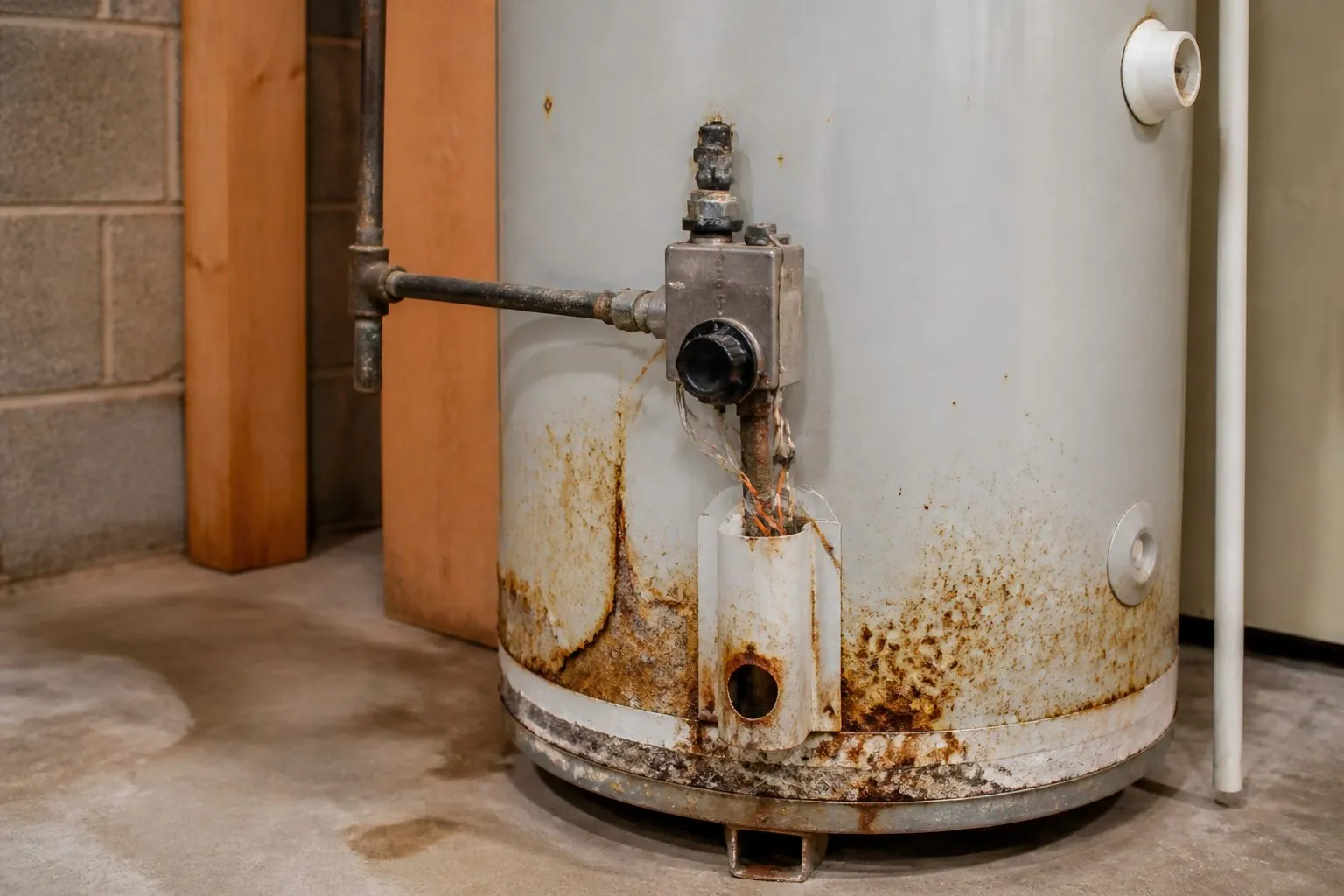
There Is Significant Corrosion
Corrosion becomes more concerning when it affects the tank itself rather than only a serviceable connection.
The location and extent matter.
Minor corrosion around a fitting is different from widespread deterioration of the storage tank.
Corrosion should therefore be evaluated alongside:
- Leak location
- Heater age
- Repair history
- Hot-water performance
- Overall tank condition
The Unit Is Older and Showing Other Problems
Age matters most when it is combined with other warning signs.
A heater reaching roughly the 10-year range deserves more attention because replacement planning becomes increasingly reasonable, especially when there are also:
- Leaks
- Corrosion
- Repeated repairs
- Reduced hot-water capacity
- Inconsistent temperatures
- Unusual noises
Age by itself is not an expiration date.
An older heater with one inexpensive repairable problem can be a very different decision from an equally old heater that is corroded, leaking, and breaking down repeatedly.
Does a Leaking Water Heater Always Need Replacement?
No. The source of the leak determines how serious it is.
A leak from a valve, fitting, or plumbing connection may be repairable.
A leak through the storage tank itself is a much stronger replacement signal.
That distinction is why simply seeing water near the heater is not enough to decide what needs to be done.
The useful question is:
Where is the water actually coming from?
If you see active leaking, having the system evaluated promptly can help determine whether you need water heater repair or whether the condition points toward water heater replacement.
Is My Water Heater Too Old to Repair?
Not automatically. A water heater’s age should influence the decision, but it should not make the decision by itself.
Ask:
- Has it needed several recent repairs?
- Is the tank corroded?
- Is it leaking?
- Has hot-water performance declined?
- Does it still meet household demand?
- Are multiple problems appearing at once?
A homeowner with an older but otherwise reliable heater may make a different decision than someone with an equally old unit experiencing repeated failures.
Think of age as a planning factor rather than a mandatory replacement date.
What If My Water Heater Works but Does Not Provide Enough Hot Water?
Insufficient hot water can have a repairable cause, so reduced capacity is not automatic proof that the heater needs to be replaced.
Possible causes include:
- Sediment accumulation
- Heating-element problems
- Burner problems
- Thermostat or control issues
- A change in household demand
- Improper sizing
- Overall deterioration
The important decision factor is whether the heater can reasonably be restored to the level of performance your household needs.
If the system functions properly after repair, replacement may not be necessary.
If your household has outgrown the existing unit or the heater is also showing age-related deterioration, replacement becomes more compelling.
Do Popping or Rumbling Noises Mean My Water Heater Needs Replacement?
Not by themselves. Water heater noise can be a warning sign, but it does not automatically mean the unit needs replacement.
Sediment accumulation can contribute to popping or rumbling sounds in storage water heaters.
Noise matters more when it occurs together with:
- Reduced hot-water performance
- Significant sediment accumulation
- Leaking
- Corrosion
- Repeated breakdowns
- Advanced age
Nolasco already covers this symptom separately, so homeowners hearing unusual sounds should also review the company’s article explaining why a water heater makes a loud popping sound once that internal article URL is confirmed in the CMS.
Does Rusty or Discolored Hot Water Mean the Tank Is Failing?
Rust-colored hot water can be a warning sign, but it does not prove by itself that the water heater needs replacement.
Discoloration can have more than one source.
One useful clue is whether the problem occurs:
- Only when using hot water
- On both hot and cold sides
- At one fixture
- Throughout the property
If the discoloration appears only on the hot side, the water heater becomes a more relevant part of the diagnosis.
The important takeaway is:
Do not replace a water heater based on color alone. Determine where the discoloration is coming from first.
How Do Repair History and Cost Affect the Decision?
There is no responsible universal dollar amount or percentage that tells every homeowner when to repair versus replace.
The better approach is to consider:
- Cost of the current repair
- Number of recent repairs
- Tank condition
- Age of the unit
- Current performance
- Other components showing deterioration
- Expected usefulness after the repair
- Cost and benefits of replacement
- Whether a newer system would better fit household demand
A relatively small repair on a dependable heater is different from repeatedly paying to keep an increasingly unreliable system running.
That is why Nolasco’s water heater repair and water heater replacement services should be viewed as two possible outcomes of the same evaluation rather than assuming one option is always better.
Should You Replace a Water Heater Before It Completely Fails?
Sometimes. Planned replacement can make sense when an older heater is already showing several signs of decline.
Planning ahead gives you time to:
- Compare water-heater types
- Consider capacity
- Review efficiency
- Evaluate installation requirements
- Decide whether you want the same type of system
- Avoid making every decision during an active failure
This does not mean every older heater should be replaced preemptively.
It means multiple warning signs plus age can make planned replacement more practical than waiting for another breakdown.
Should You Replace It With the Same Type of Water Heater?
Not necessarily. Replacing a water heater is also an opportunity to reconsider what type of system best fits the property.
Nolasco Plumbing offers multiple water-heating options, so the replacement conversation can include more than simply installing another version of the same unit.
Traditional Tank Water Heater
A conventional storage system maintains a set amount of hot water in a tank.
For a household that has been satisfied with its current setup, another appropriately sized storage system may be the straightforward option.
Nolasco provides water heater installation for homeowners replacing an existing unit or installing a new system.
Tankless Water Heater
A tankless system heats water as it is needed rather than maintaining a large stored volume.
Whether it makes sense depends on factors such as:
- Household hot-water demand
- Fuel or electrical availability
- Existing venting
- Installation conditions
- Available space
- Customer expectations
If a homeowner wants to explore that route, Nolasco also offers tankless water heater installation as part of its water-heater services.
The article should stop there rather than turning this section into a separate tank-versus-tankless comparison.
Heat Pump Water Heater
A heat pump water heater transfers heat from surrounding air into the water rather than relying solely on conventional electric resistance heating.
For appropriate properties, it can be another replacement option worth evaluating.
Nolasco offers heat pump water heater installation for homeowners considering this type of system.
The best choice depends on available space, electrical requirements, household demand, installation conditions, and the property’s existing setup.
Repair vs. Replace: Quick Decision Guide
Situation | Repair May Make Sense | Replacement May Make More Sense |
|---|---|---|
Minor component problem | When the rest of the heater is in good condition | When failures are becoming frequent |
Valve or connection leak | Often worth evaluating for repair | When tank deterioration is also present |
Tank itself is leaking | Limited repair value | Strong replacement signal |
No hot water | Depends on the failed component | When combined with age, corrosion, or repeated failures |
Reduced hot-water capacity | May have a repairable cause | When deterioration or undersizing is the larger issue |
Significant corrosion | Depends on location and extent | More concerning when the tank itself is affected |
Older unit | Age alone does not rule out repair | More compelling when combined with other warning signs |
Repeated repairs | Individual repairs may still be possible | Replacement becomes increasingly reasonable |
Heater no longer fits household needs | Repair may restore operation | Replacement can address capacity or system-type needs |
The strongest repair-or-replace decision considers the entire condition of the heater rather than one symptom in isolation.
Water Heater Repair and Replacement in Baldwin Park
If your water heater is leaking, producing inconsistent hot water, or needing repeated repairs, the first step is determining what failed and what condition the rest of the system is in.
Nolasco Plumbing provides water heater repair, water heater replacement, and water heater installation for homeowners in Baldwin Park and surrounding service areas.
Homeowners considering a different system can also explore heat pump water heater installation and Nolasco’s tankless water-heater options.
Call 626-667-2007 or schedule water heater service online to have the system evaluated.
Frequently Asked Questions
Is It Worth Repairing an Old Water Heater?
Yes, in some cases. Age should be considered together with the failure, tank condition, repair history, hot-water performance, and signs of corrosion or leaking. A relatively minor problem on an otherwise reliable older heater may still be worth repairing.
Does a Leaking Water Heater Always Need to Be Replaced?
No. A fitting, valve, or connection leak may be repairable. A leak from the storage tank itself is much more likely to make replacement the practical choice.
Is a 10-Year-Old Water Heater Too Old to Repair?
Not automatically. Ten years is a useful point to begin thinking about replacement planning, but condition matters more than age alone. A heater showing leaking, corrosion, recurring failures, and declining performance presents a stronger replacement case.
Does Popping Mean My Water Heater Is Failing?
Not necessarily. Sediment accumulation can contribute to popping or rumbling sounds. Noise should be considered with other factors such as age, leaks, corrosion, and reduced performance.
Should I Switch to Tankless When Replacing My Water Heater?
Only if it fits the property’s needs and installation conditions. Tankless systems can make sense for some homes, but fuel or electrical capacity, venting, hot-water demand, space, and installation requirements should all be considered.
Should I Replace My Water Heater Before It Stops Working Completely?
It can make sense when an older unit is already showing several warning signs. Planned replacement gives you more time to compare system types and installation options instead of making the decision during an active failure.